Presented at a joint meeting of NAIRN COMMUNITY COUNCILS – 22 MAY 2024
Climate Change is something over which ordinary people have little or no control. It is changing the face of the world and day and daily it is accelerating. It is true to say that every day somewhere on the earth a country and its people are experiencing the effects of climate change brought on by centuries of industrialisation.
- This paper focuses on Nairn and how climate change is and will affect significant change to the people, landscape, wildlife and sea life and importantly to the economic sustainability of Nairn and its surrounding area.
- Nairn’s coastline is small in comparison with other areas such as Caithness but it has a much greater population and its location along the A96 means it is a thoroughfare for economic sustainability for the Moray Coast.
- Tourism is a major driver of the local economy and as such anything that threatens this must be taken seriously and forward planning put in place as a pre-requisite to at prevent or at least delay the effects on our area and its long term survivability as a self-supporting county town.
- Because we know that climate change is advancing, it is all the more important that as part of our Local Place Plan it is recognised and work is started as soon as possible to mitigate the effects on Nairn by ensuring every avenue is explored which can help to alleviate the devastating consequences of this global event for future generations.
- There are a whole range of issues which taken as individual items may not seem related but in fact combined they all play their part in recognising the areas of concern and also hopefully providing a part in the solution. There is not a silver bullet but by taking an holistic approach across the spectrum of the following areas we can try to address the problem by taking a pragmatic view and targeting those areas we, as local people, have some control or influence over.
- The issues, in no particular order, are –
- Coastal Erosion – no direct control over climate change/tides/storms
- River Flooding
- Flood Risk Management
- Wider Development such as Ardersier, Cromarty Firth
- Water and Sewerage
- Common Good
- Funding
- Tourism Strategy
- Areas under threat – Fishertown, Golf Courses, Caravan Park, Links, Beaches, Sewage Works
- Taking each of these in turn
Coastal Erosion is accelerating year on year and its impact on our coastal areas and amenities, housing, and farming land is now clear for all to see. At present coastal erosion is happening at different speeds depending on location and exposure to tides and wind exposure. Nairn this year has had its fair share of north easterly winds, with more rain, stronger storms and ever increasing higher tides.
As a tourist destination Nairn has no alternative but to tackle this head on with as much vigour as possible. the reason why tourists come to Nairn is its beaches, links. Golf courses and open green flat spaces. If our beaches are washed away in storms or storm surges are so high they flood through onto the Links and into Fishertown, our distinctive conservation area, then this would be a disaster for Nairn.
This is a major priority for the very existence of the people of Fishertown and of the local economy.
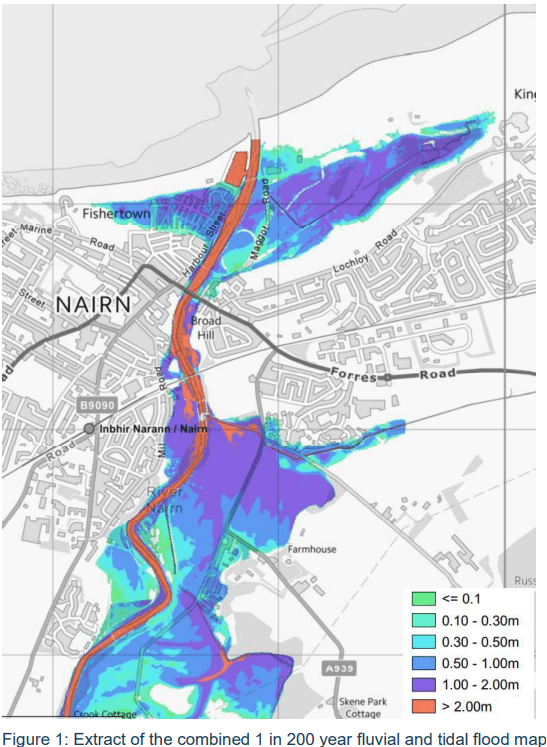
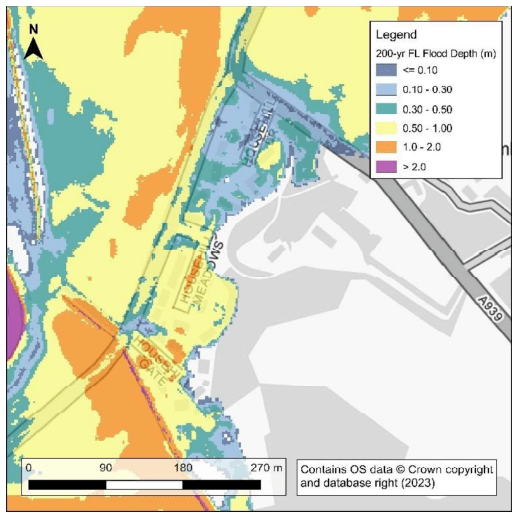
Not only is coastal erosion directly impacting the Nairn coastline, increased rainfall, storms and rising sea levels are affecting the River Nairn in the form of much higher tides. Heavier rainfall in the form of thunderstorms and prolonged rain causes burns and other watercourses to surge with water into the River Nairn along its whole length. This increases the potential for a flooding event. SEPA has already set out areas of risk along the River Nairn, including at Househill, Maggot, Nairn Dunbar Golf course, Caravan park, River Nairn through the built up town area and of course Fishertown.
This year there have been several events when high tides have caused flooding onto the Maggot, Riverside walks on both sides of the river, Auldearn and Altonburn watercourses have overflowed onto neighbouring land impacting housing.
In Fishertown, albeit the flood gates were closed from October 2023 to mid-May 2024, and this has prevented ingress from rising river levels, there is still the problem of high tides backflowing through drainage pipes and drains in car parks and streets and it is only a matter of time before such events will give rise to serious damage.
Added to this equation is the fact that the Victorian combined sewerage network (CSN) (sewerage and surface water drainage) is approximately 27% overcapacity and therefore during times of prolonged rain and thunderstorms, in order to avoid sewerage impacting low lying areas such as Fishertown, Scottish Water discharges untreated sewage into the river Nairn, which then flows onto our beaches.
There are areas of the River Nairn, for example at the Howford Bridge where this change in rainfall and storms has eroded significant parts of the riverbank and indeed, changes the course of the river.
All of these natural phenomena combined with rising sea levels will inevitably come together in a ‘perfect storm’ which could change the face of Nairn forever.
- Flood Risk Management (FRM)
Nairn is in the unfortunate position of being cleft between two local authorities, Highland to the west and Moray to the East, with Moray Council being the lead authority with regard to Flood Risk Management.
Albeit Nairn has been designated the highest flood risk in the Highlands, the Council decided in 2023 not to proceed with Flood Risk studies in the Nairn and other areas because of the serious financial position of the Council. Likewise, Moray is also in serious financial straits and therefore Nairn is not attracting the level of FRM which is required to secure its future.
Notably, Elgin, Forres and the Lossie flood plan have already benefitted from almost £100M in funding for flood defences. Inverness, however, has benefitted significantly from wide ranging flood defence schemes while Nairn has received nothing.
This situation needs to be rectified and the Community Councils/Local Place Plan should be addressing serious questions to the Moray Council and Highland Council to work together to reach a solution which will protect Nairn.
Importantly, in order for Nairn to attract national funding from the Scottish Government, there first of all needs to be FRM studies carried out which can then be used as evidence for national funding. However, neither Highland nor Moray Council are actively pursuing these studies and therefore until these are carried out, Nairn will not be eligible for national funding.
Highland Council did recently commission a survey of the Nairn coastline but did not offer any real funding support to put in place substantial flood defences; moving and replanting marram grass is not the answer and a more engineered solution requires urgent action.
- Wider Development such as Ardersier, Cromarty Firth
The Port of Ardersier is developing capabilities to act as a docking port for the green energy sector and to this end has been granted a licence to excavate 4.8M3 tonnes of sand from spit at Ardersier in order to achieve a water depth for vessels and future development of floating wind turbines and their bases. Additionally, the site will also undertake the decommissioning of oil rigs, construction of a concrete batching plant, green energy storage, and possibly even a Green steel mill.
With rising sea levels, changes in weather patterns, and more thundery weather, it is inevitable that the dredging of sand will require to be an almost constant feature of the Port of Ardersier. However, the sand must be dumped elsewhere and presently it is being taken on barges and discharged in the Moray Firth [where I don’t know and how much is being discharged is also an unknown quantity].
As this dredged sand is relocated into the Moray Firth, we have to consider what impact, if any, it is/will have on the Nairn coastline and possibly some form of study should be commissioned possibly as part of a thesis for a student in Environmental Studies.
Some people will say that this is pie in the sky stuff and that when McDermotts was in full swing in the 60s – 90s dredging of sand was carried out on a regular basis. However, 35 years on, and with climate change accelerating rapidly, we must examine every possible avenue which could affect our coastline and how it is affecting sea life and wildlife, our marine protection areas, RAMSAR/SSSI sites and our beaches, which inevitably impacts on Nairn’s tourism and ability to be a sustainable town.
As summers get hotter and winters become wetter, it is pivotal to life that there is a sufficiently accessible water supply. Nairn Lochloy is a perfect example where housing building was consented without an adequate essential water supply being available and being provided in parallel with development. Water pumping equipment had to be installed to enable householders the use of appliances and many residents said a number of years ago before these additional water pumping stations were installed, …. It was like filling your bath with a teaspoon.
Businesses in Grigorhill also experience low water pressure and often it means one business cannot use power washers to clean plant and other equipment, before they can be maintained and repaired, until another business finishes using the water. This is wholly unsatisfactory, ineffective and costs businesses money inasmuch as plant and machinery needs to be as effectively used as possible.
While Raitloan (redundant water supply for Nairn Town Centre) has received a major overhaul from Scottish Water, it is still necessary to ensure that all of Nairn has the capability of having access to a supply of water in order to accommodate the large influx of tourists from April to October, to enable businesses to expand and to allow our Hotels, BnBs, restaurants and other facilities like the swimming pool, splashpad to operate to their potential. Questions need to be asked of Scottish Water, possibly as part of the LPP exercise, viz a viz long hot summers and what water capacity is available to meet such an event, which going on the last 5/6 years are growing in number.
As already mentioned above, the Victorian CSN is already overcapacity resulting in sewerage discharges at times of prolonged rain and thunderstorms. Previous to 2015 the water in the River Nairn and at specific locations along the central and east beaches between May and end September were monitored for escherichia coli (E.Coli) and intestinal Enterococci (IE). SEPA monitored these bacteria levels under EU water quality regulations. This highlighted significantly high levels of these two bacteria which were considered to be a threat to the wellbeing of all who entered the water, including pets and other wildlife.
In 2015 the beaches of Nairn were threatened with closure due to ‘poor’ quality of bathing water, Nairn asked SEPA together with Scottish Water to help with the problem because of the knock on effect to tourism. After years of meetings and both SEPA and Scottish Water conducting major pieces of work, electronic signage was sited at the entrances to the Central and East beaches. This signage informs the public when swimming or going into the water is not advised. This then allows the public to make the choice and be aware of the risks.
Prolonged rain and flash thunderstorms still mean that in order to prevent danger to homes, particularly in Fishertown as it is the lowest lying area in Nairn, Scottish Water will open the relief ports into the River Nairn to allow the CSN to discharge untreated sewerage. As we all now know what was identified by Nairn almost 10 years ago is a day and daily occurrence throughout the whole of the country, and while Water bodies are under an obligation to ensure sewerage is not routinely discharged into rivers, lochs, and other watercourses, the regulations do allow for discharges in the event of serious capacity issues. For Nairn, as most of the Highlands with the exception of Inverness, it is highly improbable that there will be major upgrades to CSNs: this would be exorbitantly expensive and time is not on anyone’s side.
New Housing developments are required to use a two tier sewerage and drainage system inasmuch as surface water drainage does not combine with sewerage and instead is discharged into swales and SuDs ponds. However, in the case of Nairn, only Lochloy, which was built over the last 25-30 years has this two tier system. The remainder of Nairn is accommodated via the CSN. Scottish Water has made it clear that development on the west side of Nairn, i.e. Sandown, Delnies etc. must discharge its sewerage via the new WWTWs at Ardersier rather than via the CSN of Nairn which discharges across the river to the Nairn WWTWs at the rear of the East beach.
Another potential and serious concern as coastal erosion gathers pace, is the threat, in possibly 10-15 years, to the Nairn WWTWs from sea water. This is something which needs addressing now in discussions with Scottish Water in order to mitigate the effects of coastal erosion to this vitally important piece of infrastructure and ensure the long term future of Nairn.
Pivotal to most tourism and amenity related activities in Nairn is its Common Good land which stretches from Nairn Dunbar Golf Course, Parkdean Caravan Park, Links, and Play park all the way to the swimming pool. This land so to speak belongs to the Burgh of Nairn for the benefit of its residents. Highland Council administer and manage it on behalf of the people of Nairn. If climate change goes unchecked, coastal erosion, river flooding, and sewerage issues will decimate the very lands which have been the mainstay of Nairn’s tourism.
Some will say it is decades away before that happens and there are other more pressing issues. Not so, the defences which will be required to protect Nairn’s Common Good land and its beaches and thus its tourism, will cost tens , if not hundreds of millions of pounds and decades to complete. Nairn is not yet at the stage of drafting a strategy or preparing a plan. Such a strategy will take time to carefully prepare and will need continual review, particularly as climate change accelerates and priorities shift, and monies will have to be found to resource such project.
The time for action is now and this must be done by taking an holistic approach to the whole concept of climate change and how it will, not might, affect Nairn, it’s Common Good, and the local economy.
Every possible funding stream must be investigated together with private investment. Currently, in the light of the serious financial constraints facing Highland Council, Highland Councillors took the decision in September 2023 to defer any funding for FRM studies until 2028 or may be longer. Nairn cannot apply for national funding from the Scottish Government until FRM studies have been undertaken and it may be nearer 2028-30 before funding becomes available to Highland Council to undertake these studies.
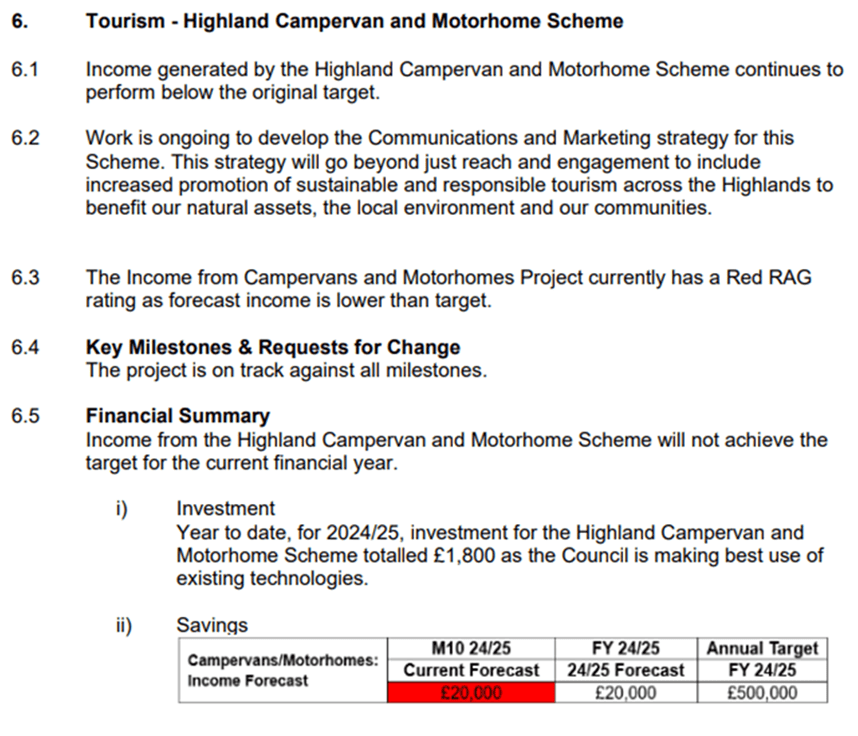
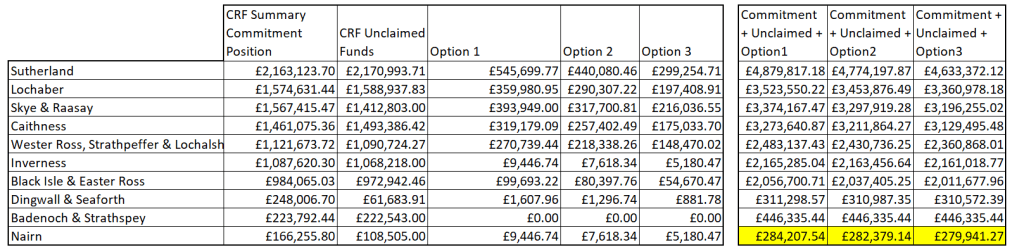
The Coastal Communities Fund is allocated each year to Highland Council and approx. 4 years ago Highland Councillors agreed a primary methodology whereby this funding was allocated based on the length of a ward’s coast line and in the case of Nairn, because of its short coast line compared to other wards, Nairn has received minimal funding, despite the fact that Nairn is one of the most popular tourism destinations in the Highland and along the Moray Coast because of its beaches, links and golf courses.
A possible solution would be for Nairn Ward Members to bring forward an alternative/modified approach to enable a portion of this Coastal Communities funding to be ringfenced and allocated for urgent FRM studies to allow coastal towns like Nairn to have studies done and therefore become eligible for national funding.
Additionally, the Scottish Government has recently announced a £5M fund for community Climate Change initiatives which could help address this issue. Nairn needs to secure some of this funding as soon as possible.
The Indicative Regional Spatial Strategy which accompanied the Inner Moray Firth Local Development Plan recently adopted by Highland Council stated that the Council’s vision for Nairn was as a sustainable Tourism Centre, something which the whole of Nairn welcomes.
However, there is no Tourism and Visitor Management Strategy for Nairn or not one that has been made available to the residents of the town. Highland Council has recently published an update on its Tourism Strategy but Nairn fails to be mentioned anywhere in this document. So a coherent and pragmatic strategy documents needs to be compiled for Nairn with realistic and deliverable objectives. Such a strategy should form part of the LPP, and it is essential that an any Tourism and Visitor Management Strategy looks at short term and long term issues (before Bypass and after Bypass, and bearing in mind climate change and other infrastructure issues) and is developed and put in place to ensure a future sustainable and economically self-reliant Tourism sector within Nairn.
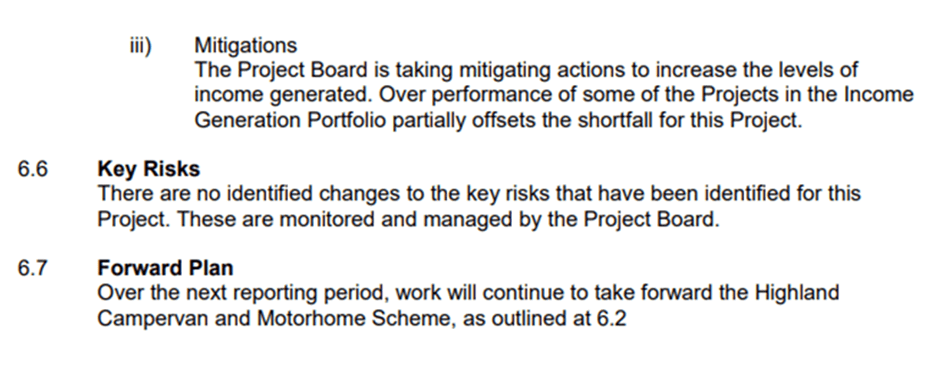
Highland Council prepared its Strategic Tourism Infrastructure Development Plan in 2022 which provided a more strategic approach to the development of tourism infrastructure investment, particularly projects funded by the Rural Tourism Infrastructure Fund (RTIF). While a significant number of communities throughout the Highlands have benefitted from this fund, Nairn has not been so lucky and yet Highland Council in their IRSS consider and envision Nairn as a sustainable tourism centre contributing to the Highland economy.
Certainly Nairn’s tourism figures are high compared with many others yet Nairn has not been on the receiving end of funding. The questions which need to be answered are why and what can be done to change Nairn’s fortunes? One specific area which needs addressing is a detailed analysis of Nairn Tourism figures. It is understood that BID, as the Destination Management Organisation recognised by Highland Council, has such local figures yet Nairn continues to receive nothing from the RTIF. The figures needed are visitor numbers, direct expenditure, economic impact and direct employment to name but a few.
Additionally, Nairn needs to get its fair share of budgets as well as funding, such as the UK Shared Prosperity Fund (UKSPF) if Nairn is to continue to thrive and be a self-sustaining local place.
Our Ward Members are ready to go into bat for Nairn. As a priority, we need to be able to provide them with evidence and proposed solutions to enable them to persuade their Council colleagues that a change in policy with regard to the Coastal Communities and Rural Tourism Investment Funds is now needed. If Highland Council’s vision of Nairn as a sustainable Tourism destination is to be realised, then a more pragmatic approach to how funding is allocated is now required.
As an integrated Climate Change strategy emerges from Nairn’s community via its Local Place Plan, our Ward Members can take this forward with Highland/Moray Councils and with the Scottish Government.
Cross Linking
NPF4 focuses on the place principle and the wellbeing of the people who live and work in a place. Climate change impacts on most if not all the NPF4 policies and therefore when compiling Nairn’s strategy to locally address climate change an holistic approach must be taken to address a multitude of issues such as
- IRSS
- Coastal Defences
- Flood Risk Management of our River Nairn and other watercourses
- Infrastructure
- Tourism and expansion of businesses/jobs
- Fair share budgets and equitable access to funding both at national level and locally determined funding by Highland Council
- Wider developments which may impact Nairn such as the freeport at Ardersier, housing, essential infrastructure
- How to protect
- Fishertown/and other housing close to the River
- Amenities -Golf Courses, Caravan Park, Links, Beaches, Swimming Pool
List not exhaustive
Tackling the issue of Climate Change in a proactive, local, and forward thinking way is not a small task and no doubt the boundaries of such a project will continually change but it is something which Nairn needs to do now for the future of Nairn and its next generations.
Action required
A cohesive, joined up approach is required. A Working Group with the inclusion of our four Ward Members needs to be urgently set up to address Climate Change and its impact for Nairn from
- A tourism perspective
- Protection of homes and lives in Fishertown
- Protection of common good assets, including caravan park, links and both golf courses
- Protection and damage from flooding along the length of the River Nairn
- Sustainability of the Nairn economy
- List not exhaustive
This will be a long term working group but the most urgent issue to be addressed is securing funding for FRM studies to be commenced as soon as possible. As already mentioned, even when these studies are completed and submitted to the Scottish Government, they are added to an ever growing list of submissions for funding from all over Scotland and it may, therefore, take 10-15 years at least before any funding is allocated to Nairn.
Around the country, the average coastal erosion over the last 1/2 years, and particularly noticeable last year, has been between 5-7 metres (ie 23ft) – in some locations it is more.
- Think about the beaches and their proximity to the Links path, Caravan site, Nairn Golf courses and sewage works and how much land will be eroded if the pace of erosion mentioned above continues. It doesn’t take a mathematician to work out the scale of the problem in 10 years time!
- Think about all the people who live in Fishertown.
- Think about Nairn’s status as a tourist destination and the impact for BnBs, Hotels, Restaurants and Town Centre.
- Think about the loss of Common Good assets
- Think about what will happen to Nairn.
I am not a green warrior but I do recognise the significant impact Climate Change will bring to Nairn. Our Local Place Plan not only needs to spell this out clearly but it has to demonstrate the Community is proactively working together to
- consider solutions
- secure funding
- raise Nairn’s profile and need with Highland and Moray Councils as well as the Scottish Government
- prepare a dynamic short/long term strategy to address changing circumstances
This paper was written to stimulate thoughts and discussion.
NRCC_LT_V3_220524











 Nairn River Community Council